If you are involved in crypto for the past few years then you likely remember that since 2024, a wave of privacy-coin delistings has happened on centralized crypto exchanges.
Binance announced it would remove Monero (XMR) trading, effective February 20, 2024, and OKX delisted XMR, Zcash (ZEC), and Dash (DASH) the same year amid mounting compliance and regulatory pressures.
By mid-2026, the number of exchanges delisting privacy coins had jumped to 73 globally, up from 51 in 2023. Monero suffered the biggest impact, with a 6x increase in yearly delistings, followed by Dash.
The regulatory pressure continues. Dubai’s financial regulator banned privacy coins like Monero and Zcash on licensed platforms in the Dubai International Financial Centre.
Meanwhile, the EU’s MiCA regulation, which came into full force in late 2024, includes a mandatory review clause requiring the European Commission to report on its application by June 30, 2027, with authority to propose further legislative changes that could tighten restrictions on privacy-focused assets.
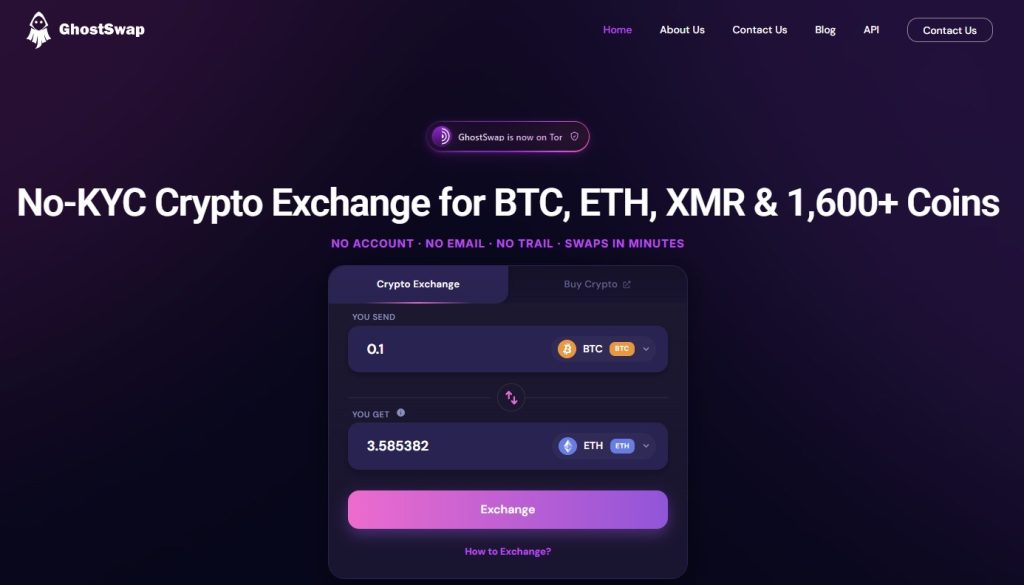
In contrast, GhostSwap (a non-custodial, and no-KYC crypto swap service) continues to support Monero, Zcash, Dash, and dozens of other privacy tokens. Its newly launched public swap-rate API provides live XMR rates (with min/max limits) without any API key, which basically enables builders and price-display sites to integrate privacy-coin pricing instantly.
GhostSwap’s model (user funds are never held on the platform) means it operates outside traditional exchange controls. This is precisely why privacy tokens remain swappable here when custodial exchanges are forced to shut down those pairs.
Why GhostSwap Keeps Privacy Coins Liquid
GhostSwap is fundamentally different from centralized exchanges. It’s a privacy-first, non-custodial swap platform. Users simply select coins and send funds to a GhostSwap-provided address; the service finds the best route and deposits the destination coin to the user’s wallet. Crucially, GhostSwap never holds user funds in custody. There is no account or login; all swaps are on-chain, wallet-to-wallet, with no personal data collected.
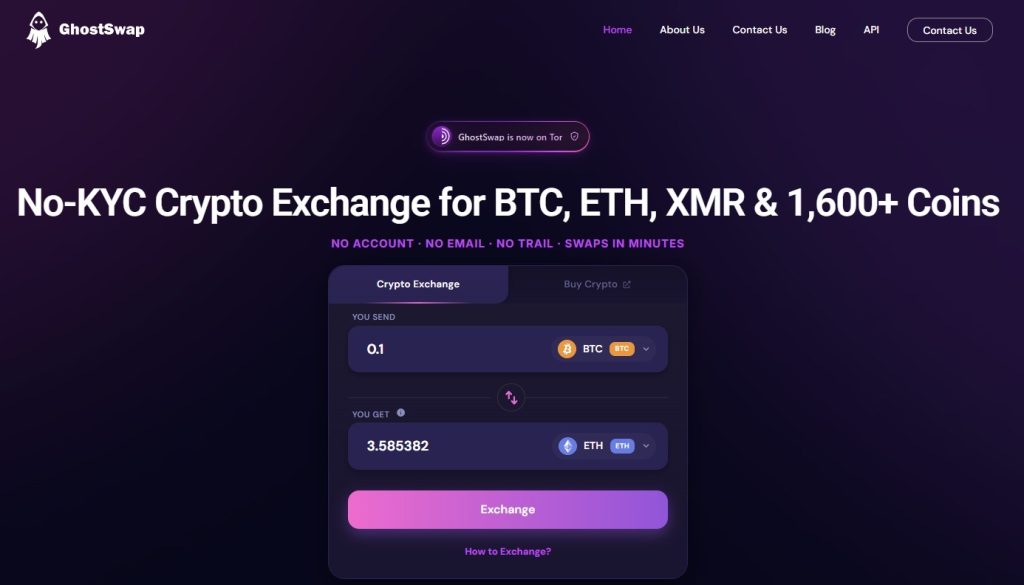
This means GhostSwap is effectively a smart liquidity router which connects decentralized pools and CEX liquidity under the hood, rather than a traditional exchange. When regulators pressure a centralized exchange to delist Monero, that exchange must comply because it holds user funds and operates under specific jurisdictional licenses.
GhostSwap, by contrast, simply routes users to available liquidity across multiple sources. It doesn’t custody assets, so it doesn’t face the same compliance ultimatums.
This resilience extends to Zcash, Dash, and other privacy-focused assets. Binance, OKX, and other “big” crypto exchanges have removed these tokens from their order books, GhostSwap continues to support them as core pairs. Monero remains a primary asset; pairs like BTC to XMR and ETH to XMR are listed among the platform’s top offerings.
Public API: Privacy-Coin Pricing for Everyone
Integrators and users can now get real-time Monero pricing via GhostSwap’s public no-key API. The endpoint is CORS-enabled, rate-limited to 60 requests per minute, and returns GhostSwap’s aggregated best rates including required min/max swap sizes. This open model lowers barriers for wallets, trading bots, and dashboards to include privacy coins.
Each swap has explicit min/max limits returned by the quote API. For instance, a sample public API call gave XMR’s minimum as 0.10 XMR and maximum around 2,337 XMR. These values change with liquidity, but the key point is they’re visible via the API, removing guesswork for integrators. Price-display and comparison sites can now show GhostSwap’s best privacy-coin rates on the fly.
Still, regulators argue such swaps create “blind spots” for surveillance. The tension is clear: privacy coins are harder to access on traditional exchanges, but platforms like GhostSwap keep them liquid and swappable which leads to an emerging clash between open-access crypto infrastructure and AML rules.
Why Swap BTC for XMR on GhostSwap?
Swapping Bitcoin to Monero on GhostSwap is one of the most effective ways to move your cryptocurrency into a private, untraceable form without KYC or account creation. Bitcoin is transparent; all transactions are publicly visible on the blockchain, which means anyone can trace wallet balances and payment history. By converting BTC to XMR, you gain the full privacy protections that Monero provides.
Shield your financial activity
Monero is fully private; ring signatures, stealth addresses, and RingCT make every transaction untraceable by default. Your transactions, balances, and payment history remain invisible to outside observers.
Break the on-chain trail
Your BTC holdings are traceable on the Bitcoin blockchain. Once converted to XMR through a no-KYC exchange, there is no account or identity linking the two.
Low fees on the Monero network
Monero fees are extremely low, typically less than $0.01 per transaction, making XMR practical for regular private transactions — not just large transfers.
No identity verification required
GhostSwap processes your BTC to XMR swap without KYC, sign-ups, or personal data collection. Your swap stays as private as Monero itself.
Exchange BTC for XMR instantly on GhostSwap with no sign-up, no identity verification, and no limits. Your Monero arrives in 2–10 minutes (10 block confirmations) and Monero fees are consistently low (~$0.01 per transaction)
How to Swap Bitcoin to Monero on GhostSwap?
The process to swap Bitcoin to Monero on GhostSwap is very easy and takes just a few steps:
Select BTC and XMR
Choose Bitcoin in the “You Send” field, enter the amount, and select Monero in the “You Get” field.
Enter Monero Address
Provide your Monero wallet address for receiving XMR.
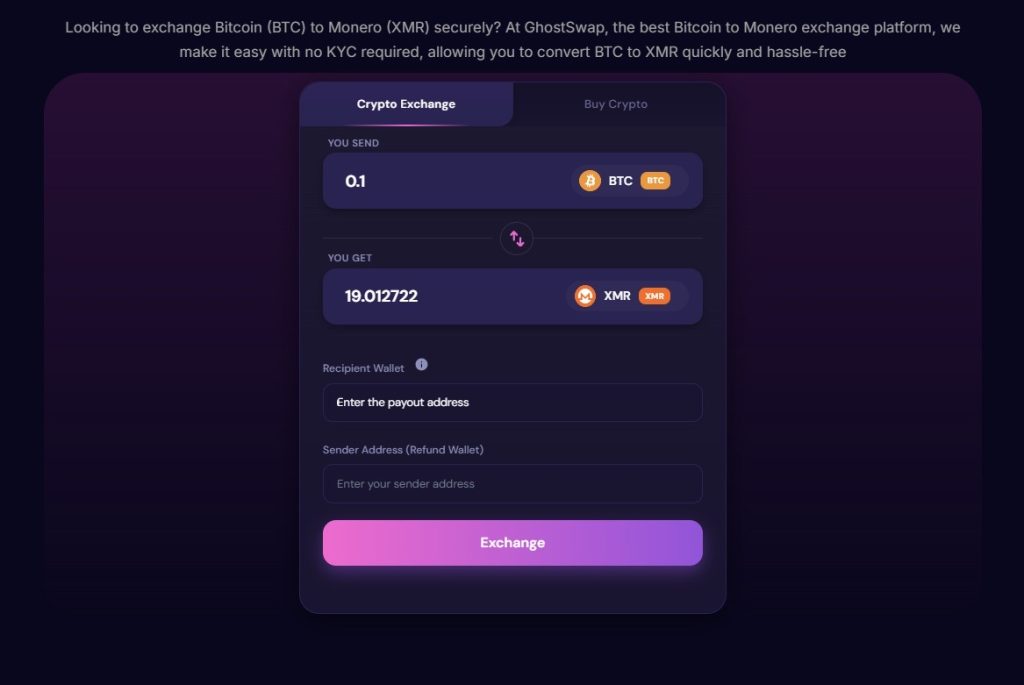
Send Bitcoin
Send your BTC to the address provided to initiate the exchange.
Receive Monero
Once the exchange is complete, receive XMR in your wallet.
The entire process is non-custodial; GhostSwap never holds your funds. You’re in control from start to finish.
A Broader Perspective
The delisting wave isn’t slowing down. With MiCA reviews approaching in 2027 and ongoing regulatory scrutiny in Asia and the Middle East, privacy coins face an uncertain future on traditional exchanges. But platforms like GhostSwap demonstrate that the infrastructure for private, permissionless crypto transactions remains resilient.
GhostSwap is making Monero swappable and it’s making privacy-coin pricing accessible to developers, wallets, and comparison sites around the world. This open stance to pricing and swapping may well define the next phase of crypto infrastructure: accessible, resilient, and built for users who value both privacy and choice.
The post As Exchanges Delist Monero, GhostSwap Keeps It Swappable – No KYC appeared first on Cryptonews.
News#Exchanges #Delist #Monero #GhostSwap #Swappable #KYC1782718863